
Walking Barefoot and Connecting with Nature: What Does Science Say?
Walking barefoot on natural surfaces is often promoted as a way to reduce stress, improve sleep, and reconnect with nature. But which benefits are supported by scientific evidence, and what precautions should we take?
Reconnecting with Nature
In our increasingly busy and technology-driven world, finding time to connect with nature can be a valuable part of maintaining physical and emotional well-being.
One practice that has attracted growing attention is walking barefoot on natural surfaces such as grass, sand, or soil.
Sometimes called grounding or earthing, the practice involves direct physical contact between the body and the Earth's surface.
Supporters claim that this connection provides numerous health benefits, ranging from stress reduction and improved sleep to better circulation and reduced inflammation.
However, it is important to distinguish between the established benefits of spending time outdoors and the less certain scientific claims surrounding earthing.
What Is Grounding or Earthing?
Grounding, in this context, refers to direct contact between the human body and the ground.
Common examples include:
Walking barefoot on grass.
Standing barefoot on clean sand.
Sitting outdoors with bare feet touching the ground.
Spending time in natural environments without footwear.
Some advocates suggest that electrons transferred from the Earth into the body can produce therapeutic effects.
While electrical contact with the ground is physically possible, strong clinical evidence demonstrating that this mechanism produces the wide-ranging health benefits commonly advertised remains limited.
Potential Benefits of Barefoot Walking and Outdoor Activity
1. Encouraging Relaxation
Spending time in peaceful natural environments may help reduce perceived stress and encourage relaxation.
Walking outdoors can provide opportunities to disconnect from daily pressures, enjoy fresh air, and engage in calming activities.
However, these benefits do not necessarily depend on being barefoot.
2. Supporting Physical Activity
Walking is an accessible form of physical activity that can contribute to cardiovascular fitness, mobility, and overall health.
Regular walking may also support mood and sleep quality.
The benefits of walking are well established, but there is insufficient evidence that walking barefoot provides greater overall health benefits than walking with appropriate footwear.
3. Developing Foot Awareness
Walking barefoot on suitable, safe surfaces can change how the feet interact with the ground.
It may encourage awareness of balance, posture, and foot movement.
Some research has explored barefoot activity in relation to foot strength and biomechanics, although outcomes depend on individual circumstances, surfaces, and activity levels.
4. Supporting Emotional Well-Being
Outdoor activities can offer opportunities for reflection, mindfulness, and social connection.
For some individuals, spending quiet time in a garden, park, or natural setting may provide a welcome break from stressful routines.
These experiences can support emotional well-being as part of a broader healthy lifestyle.
What About the Claims of Improved Immunity and Reduced Inflammation?
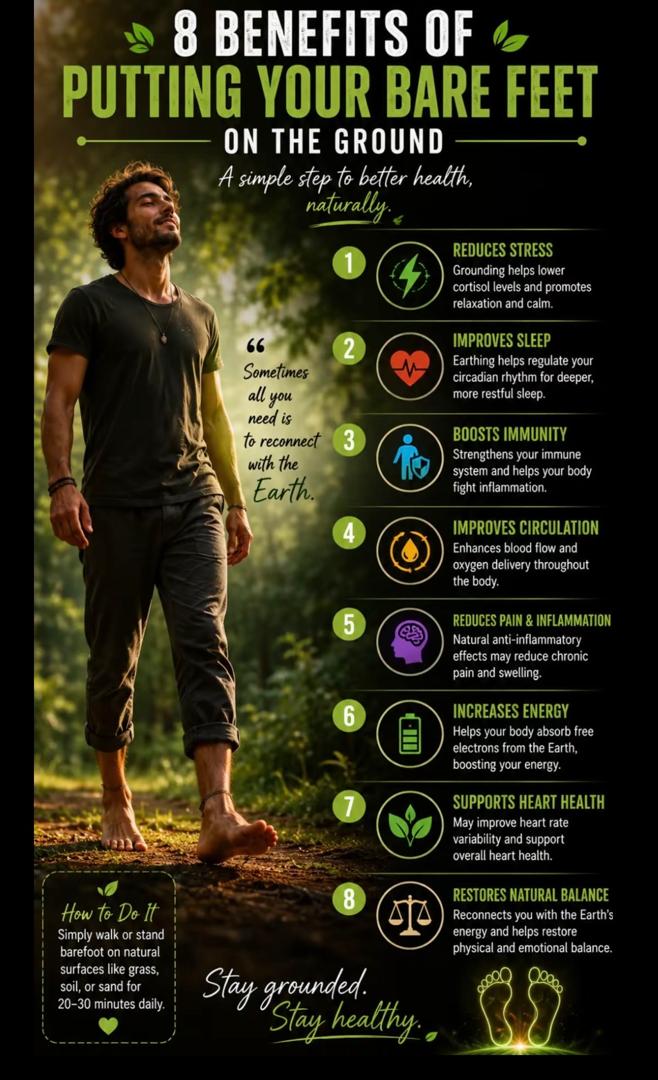
Online infographics frequently claim that grounding can:
Strengthen the immune system.
Reduce chronic inflammation.
Improve blood circulation.
Lower blood pressure.
Balance the nervous system.
Neutralize harmful free radicals.
Increase energy through electrons absorbed from the Earth.
These claims require careful interpretation.
Although some small studies have explored grounding and physiological outcomes, the available research has important limitations, including small sample sizes and methodological concerns.
At present, there is insufficient high-quality clinical evidence to establish grounding as an effective treatment for these conditions.
People should not replace prescribed medication, professional medical care, or established preventive health practices with grounding activities.
Safety Considerations Before Walking Barefoot
Walking barefoot is not suitable for everyone.
Natural surfaces may contain sharp objects, broken glass, insects, contaminated soil, or other hazards.
Individuals with diabetes, reduced foot sensation, peripheral neuropathy, poor circulation, open wounds, or other conditions affecting foot health should exercise particular caution.
For people at increased risk of foot injuries, protective footwear is generally the safer choice.
If you choose to walk barefoot, consider the following precautions:
Use a clean, familiar, and hazard-free surface.
Avoid extremely hot pavement or sand.
Check your feet for cuts or injuries afterward.
Stop if you experience pain or discomfort.
Wear appropriate footwear when the environment is unsafe.
Healthy Ways to Connect with Nature
You do not need to walk barefoot to enjoy the potential benefits of being outdoors.
Other activities include taking a walk in a park, gardening, exercising outdoors, spending time near trees, or practicing mindful breathing in a peaceful environment.
What matters most is finding safe, enjoyable activities that support regular movement and emotional well-being.
Sangbe Foundation's Health Awareness Message
At Sangbe Foundation, we encourage individuals and communities to make informed health decisions based on reliable scientific information.
Natural environments can play a positive role in our lives, but health claims should be evaluated carefully before being accepted as established facts.
Enjoy nature, stay physically active, and prioritize evidence-based approaches to your health.
This article is provided for general health education and does not replace professional medical advice.