
The Power of Gratitude: Starting Each Day with a Positive Mindset
Practicing gratitude can help us recognize positive experiences, strengthen relationships, and develop a more balanced outlook on life. Learn how simple daily habits may support emotional well-being.
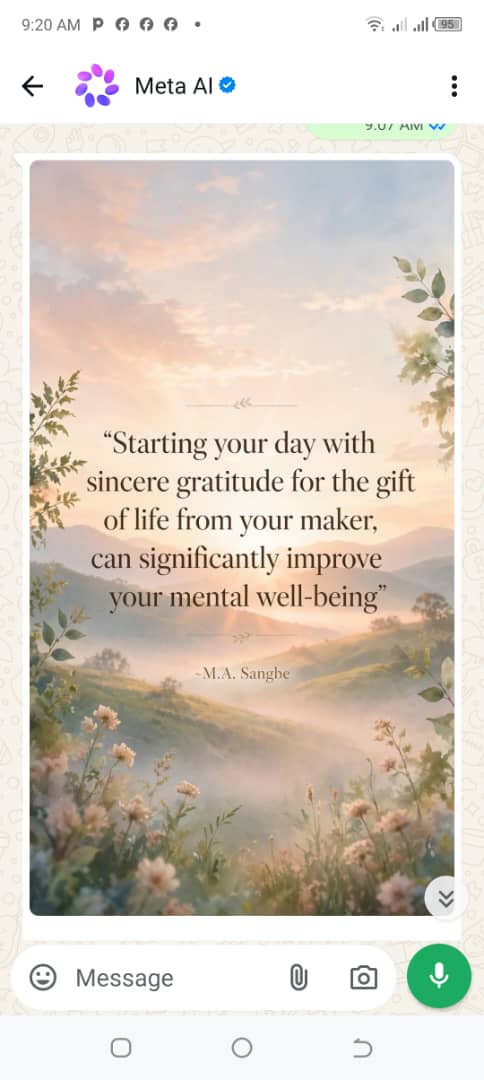
A Moment of Gratitude
"Starting your day with sincere gratitude for the gift of life from your maker, can significantly improve your mental well-being." — M.A. Sangbe
Every morning presents an opportunity to reflect on life, appreciate what we have, and approach the day with intention.
For many people, gratitude is closely connected to their faith, personal values, family relationships, and experiences.
Taking a moment to appreciate these aspects of life can encourage reflection and help us recognize positive experiences that might otherwise go unnoticed.
At Sangbe Foundation, we believe that emotional well-being can be supported through simple, meaningful practices that encourage self-awareness, compassion, and healthy relationships.
Understanding Gratitude
Gratitude is the feeling of appreciation for something meaningful or beneficial in our lives.
It may involve recognizing the support of loved ones, appreciating personal achievements, acknowledging opportunities, or simply being thankful for another day.
Gratitude does not require a perfect life.
People can experience genuine appreciation while also facing hardship, uncertainty, grief, or disappointment.
The practice is about recognizing what is meaningful without denying the challenges we face.
How Gratitude May Support Mental Well-Being
Psychological research has explored connections between gratitude and emotional health.
Some studies suggest that gratitude-based activities may contribute to improvements in subjective well-being and positive emotions.
However, the effects vary between individuals, and gratitude should not be considered a treatment for mental health conditions.
1. Encouraging Positive Reflection
Our minds naturally pay attention to problems and potential threats.
Taking time to acknowledge positive experiences can help create a more balanced perspective.
2. Strengthening Relationships
Expressing appreciation to friends, family members, colleagues, and others can encourage connection and strengthen interpersonal relationships.
A simple expression of thanks can remind people that their kindness and contributions matter.
3. Supporting Emotional Resilience
Gratitude may help some individuals recognize sources of strength and support during challenging periods.
This does not eliminate hardship, but it can provide an additional way to cope with everyday stress.
4. Encouraging Mindfulness
Practicing gratitude invites us to pay attention to the present moment.
Rather than constantly focusing on what is missing, we can take time to recognize meaningful aspects of our lives.
Five Simple Ways to Practice Gratitude
1. Begin your morning with reflection
Before starting your daily activities, take a moment to identify something you appreciate.
2. Keep a gratitude journal
Write down two or three experiences, people, or opportunities for which you feel thankful.
3. Express appreciation to others
Thank someone who has supported, encouraged, or helped you.
4. Appreciate small moments
A peaceful morning, a conversation with a loved one, or a moment of rest can be meaningful.
5. End your day with perspective
Reflect on something positive that happened, even if the day was difficult.
These activities are suggestions rather than requirements. Individuals should choose practices that feel authentic and helpful to them.
Gratitude, Faith, and Personal Values
For many individuals, gratitude is also a spiritual practice.
Prayer, reflection, and appreciation for the gift of life can provide meaning, comfort, and a sense of connection.
Different people express gratitude in different ways, and these personal differences deserve respect.
Whether gratitude is practiced through faith, quiet reflection, journaling, or acts of kindness, its value often lies in encouraging appreciation and intentional living.
Gratitude Does Not Mean Ignoring Difficult Emotions
An important part of mental health awareness is recognizing that gratitude and emotional difficulties can coexist.
A person may feel thankful for family support while experiencing anxiety.
Someone may appreciate life while also struggling with grief, depression, or uncertainty.
Practicing gratitude should never become a reason to dismiss painful emotions or discourage someone from seeking professional support.
Emotional well-being requires compassion, realistic expectations, and appropriate care.
Building a Culture of Appreciation
Communities benefit when people recognize and value one another.
Small acts of appreciation can encourage kindness, strengthen social connections, and promote a sense of belonging.
At Sangbe Foundation, we aim to encourage conversations and educational activities that support mental health awareness and community well-being.
By promoting gratitude alongside emotional awareness, empathy, and access to support, we hope to contribute to healthier and more compassionate communities.
Start with One Thing Today
Before beginning your next activity, take a moment to think about something meaningful in your life.
It could be a person, an opportunity, a personal achievement, or simply a moment of peace.
Allow yourself to appreciate it without feeling pressured to ignore anything difficult.
Gratitude does not make every challenge disappear, but it can help us recognize the good that exists alongside life's difficulties.
For mental health awareness and community psychoeducation, contact Sangbe Foundation at sangbefoundation@gmail.com.