
Mental Well-Being Begins with a Decision to Take the First Step
Mental well-being is an essential part of a healthy and fulfilling life. Discover why acknowledging our emotional struggles, seeking support, and taking small positive steps can make a meaningful difference.
Every Journey Begins Somewhere
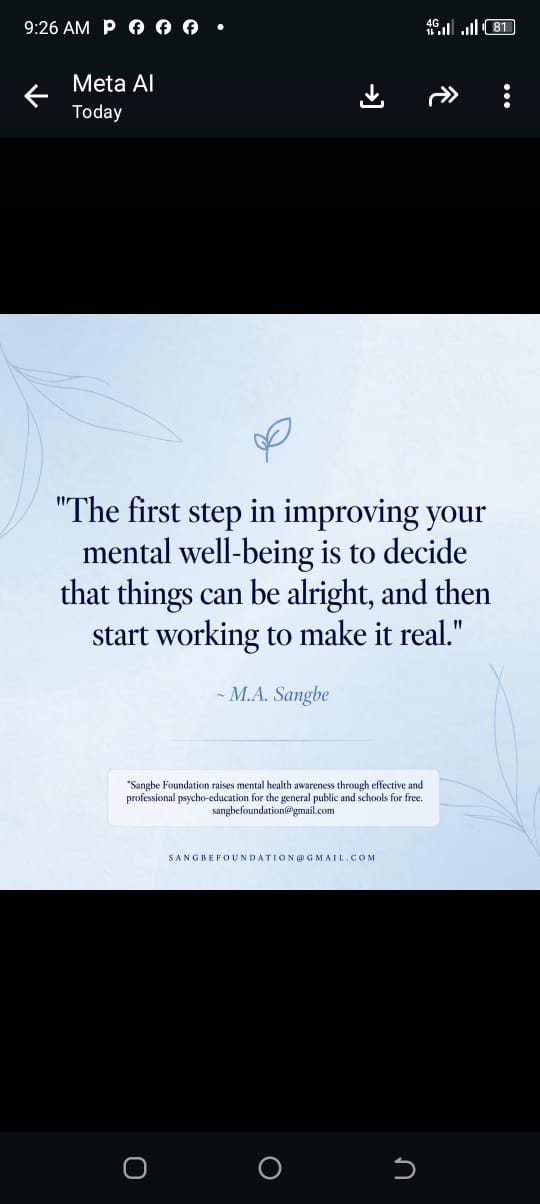
"The first step in improving your mental well-being is to decide that things can be alright, and then start working to make it real." — M.A. Sangbe
Mental health is an important part of our overall well-being, yet it is often overlooked or misunderstood. Many people experience emotional challenges, stress, anxiety, or periods of uncertainty, sometimes without knowing where to turn for support.
Improving mental well-being does not necessarily begin with a dramatic change. Sometimes, it begins with acknowledging how we feel, recognizing that support is available, and deciding to take one small step toward a healthier state of mind.
At Sangbe Foundation, we believe that mental health awareness is essential to building healthier individuals, stronger families, and more compassionate communities.
Understanding Mental Well-Being
Mental well-being is more than the absence of mental illness. It includes our emotional, psychological, and social health. It influences how we think, feel, respond to challenges, build relationships, and make everyday decisions.
Just as we care for our physical health, our mental health deserves attention, understanding, and care.
Everyone experiences difficult moments. Feeling overwhelmed, discouraged, or emotionally exhausted does not mean a person has failed. Recognizing these experiences and seeking appropriate support can be an important part of recovery and personal growth.
Small Steps Can Make a Difference
Improving mental well-being is often a gradual process. Some helpful steps include:
Acknowledge your feelings. Recognizing and accepting your emotions can help you understand what you are experiencing.
Talk to someone you trust. Sharing your concerns with a friend, family member, counselor, or qualified mental health professional can provide valuable support.
Prioritize rest and self-care. Adequate sleep, physical activity, and healthy routines can support emotional well-being.
Stay connected. Positive relationships and community support can reduce feelings of isolation.
Seek professional assistance when needed. Persistent emotional difficulties deserve attention from qualified healthcare professionals.
There is no single approach that works for everyone. What matters is finding healthy, sustainable ways to care for yourself and recognizing when additional help may be necessary.
Breaking the Silence Around Mental Health
In many communities, conversations about mental health remain difficult because of stigma, misconceptions, or fear of judgment.
This silence can prevent individuals from seeking help when they need it most.
Through awareness and education, we can encourage more open conversations, challenge harmful stereotypes, and promote an environment where people feel comfortable discussing their emotional well-being.
Mental health challenges should be approached with compassion, dignity, and understanding.
Our Commitment at Sangbe Foundation
Sangbe Foundation is committed to promoting mental health awareness through education, community engagement, and accessible information.
By encouraging conversations about mental well-being, we hope to contribute to communities where individuals feel informed, supported, and empowered to seek help.
We believe that meaningful change begins when people recognize the importance of mental health and work together to support one another.
Take the First Step Today
You do not need to have everything figured out before taking care of your mental health.
Start by checking in with yourself, reaching out to someone you trust, or making one positive change to your daily routine.
Remember that seeking help is a sign of strength, and progress can take time.
A healthier mind contributes to a healthier life, and healthier individuals help build stronger communities.
For mental health awareness, educational outreach, and community engagement, contact Sangbe Foundation at sangbefoundation@gmail.com.